Crisis strikes when you least expect it. Organizations and leaders find themselves at a loss for words, their teams scrambling to deliver a perfect message to anyone, everyone that’ll listen. Crisis management and communications revolves around projecting stability and evoking confidence—that whatever change has suddenly occurred, the team in place—especially leadership—is well-suited to navigate their people to calmer waters.
Oftentimes the stress and upheaval of it all does more harm than good. We all care deeply about our work. There are relationships and personal reputations at stake. Emotions can cloud one’s judgment. And more often than not, organizations and campaigns don’t have the infrastructure, clarity, or premeditated plan on how to do damage control.
To keep people abreast of a crisis, you must first be able to define it. Then, organizationally, you have to proactively manage the crisis, identify who needs to know what, when to tell them and how to deliver the message.
At DTC, we define crisis as any significant event that creates uncertainty and could have a long-lasting negative effect on the organization’s reputation and/or mission. Crises may dramatically impact your ability to operate if they aren’t handled appropriately.
Mishandling a crisis may result in:
- Loss of donor or client trust, negatively impacting financial stability
- Confused and angry staff leading to uncoordinated and ineffective execution, crumbling internal operations, and loss of faith in the core mission
- Distrust from partners and other stakeholders that are critical to advance organizational and campaign goals
- Diminished reputations that make it difficult to build new relationships with donors, partners, clients, vendors and potential staff
We understand that every crisis requires meticulous planning—ideally before catastrophe knocks at the door—and swift action, so we’ve offered just some of the most crucial steps in assessing your crisis communications plan.
Choose your fighters
In developing crisis communications, it’s imperative to identify the single person who bottom lines decisions and the broader crisis response team. Assign roles and responsibilities to each. Give them a toolkit for their specific channels, if and when you can. Assemble a team you can rely on with the right skills and relationships to execute their tasks, which may include but isn’t limited to:
- Press engagement
- Internal communications
- Social media response
- Board communications
- Community outreach
Identify your escalation path and framework
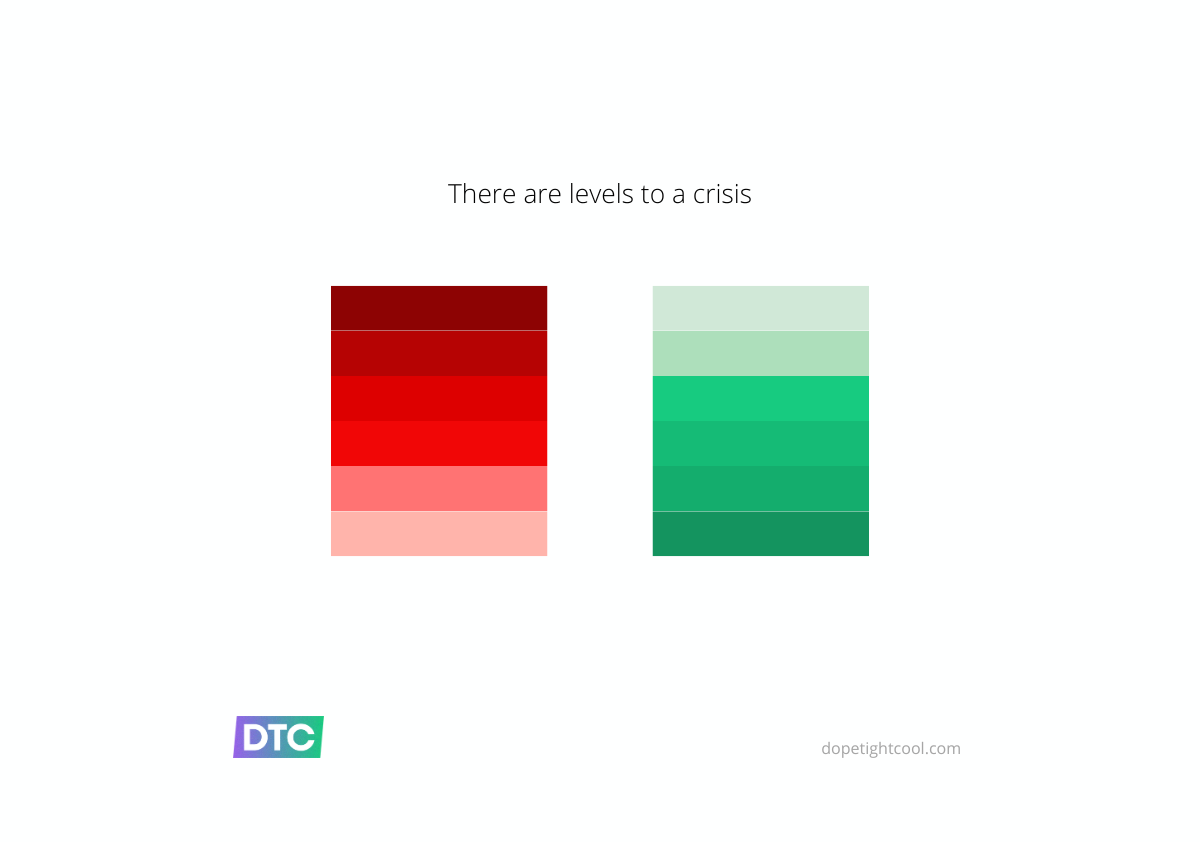
There are many types of crises—ranging from natural disasters to misconduct, workplace violence to personnel changes. The following is a helpful framework to assess what levels of crises you’re dealing with.
Before jumping into action, we recommend aligning your crisis response team with your crisis within the category that resonates the most:
Level 1 – A big, emergent threat that could result in immediate disaster for individuals and/or put the organization in a prolonged existential crisis. Respond within 48 hours.
Level 2 – A major incident that has potential risk or long-term impact to operations, client success, and/or organizational reputation.
Level 3 – Your organization is not at imminent or long-term risk, but should be in alignment in response and what comes next.
Level 4 – An exaggerated version of day-to-day issues that may need a bit more effort to address and solve but are typically small operational disruptions. Most “crises” fall into this category.
Hone in on your key messages
What are the key points you want to highlight as an organization in preparation for releasing your holding statement or keeping in mind as you communicate with the public? Do you want to point back to your organization’s mission? For instance, if there’s been a leadership transition, how will you ensure your audience feels there’s no gap in services or commitment to the cause? In addition, you’ll also want to make sure you’re identifying messages to avoid in order to prevent triggering concerns.
Pinpoint your target audience
Different onlookers require different vistas. Who are the internal and external personas that matter to your organization? Identifying these people respectively, along with their characteristics and pain points will strategically set you up for success in communicating your messages effectively.
These tips aren’t meant to be comprehensive, but to be helpful guideposts as you navigate turbulent organizational waters. Take solace in that many organizations, at some point in their tenure, will have to respond to what feels like disaster. It won’t seem as such if you thoughtfully design your way out of crisis.